 Important Notice:
This event has been cancelled.


Presented by Paul Burke, M.A., RSW, CACII
Monday, June 10, 2019 – Tuesday, June 11, 2019 | Saskatoon, sk
You are on the in-person registration page for this event. If you would like to attend online (live webinar or on-demand), please register through our Online Learning website.
Important Notice:This event has been cancelled.
Monday, June 10, 2019 – Tuesday, June 11, 2019
9:00am – 4:00pm
Hilton Garden Inn Saskatoon Downtown
90 22 St E, Saskatoon, SK S7K 3X6
Phone: (306) 244-2311
Motivational Interviewing (MI) is an approach to communication that tends to help clients construct their own argument(s) in support of a pre-determined change. Fidelity to this way of focusing a conversation serves to enhance the client’s desires for the identified change, and to assist them in articulating their own reasons and needs related to the targeted change. The skillful use of MI with clients leads to activation and strengthening of readiness, willingness and ability to engage with a strategic change plan – of their own making.
This 2-day workshop provides a thorough foundation upon which more advanced concepts and skills are presented and practiced. A balance of theory and practice opportunities will facilitate your understanding of and skill enhancement in:
Change from within a variety of mental health, substance use treatment, and chronic disease management contexts will be the primary focus of case discussions and applied practice sessions in this first instalment of our MI training series. Emphasis will be placed on the use of MI for enhanced treatment compliance and treatment engagement and on evoking desire and readiness for health oriented behaviour changes.
Clinical Professionals: All mental health professionals including, but not limited to Clinical Counsellors, Psychologists, Psychotherapists, Social Workers, Nurses, Occupational Therapists, Hospice and Palliative Care Workers, School Counsellors, Youth Workers, Mental Health Workers, Addiction Specialists, Marital & Family Therapists, Speech Language Pathologists, Vocational Rehabilitation Consultants and all professionals looking to enhance their therapeutic skills.
DAY ONE
Introductions of Participants and Conceptual Foundations
Transtheoretical Model of Change
Reflective Listening as a Core Skill in MI work (Focus: The Engaging Process)
The Purpose and Definition of MI
Review and Illustration of Key Elements Covered Today (Video Review Exercise)
Elicit Insights Re: What Gets in My Way of Doing MI? What It Seem Hard? How is MI so Simple – But Not Easy?
DAY TWO
Common “Traps” Which Thwart MI Competency (and why they emerge)
“Spirit” (Establishing An Environment Conducive To MI), processes and principles of MI conversations
Directionality in MI
Client “Push Back” (aka “resistance”) in the Context of an MI Conversation (Cause – effect)
Affirmation as An MI Skill
Change Talk
Recognition of Change Talk Exercise
Notes on Helper Responses To Change Talk
Group Exercise (Listening For and Responding To Change Talk
The Evoking Process
Practice Session using O.A.R.S. for Engaging and Evocation
Wrap-Up and Evaluations
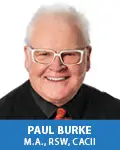
Paul is a registered social worker with extensive clinical and training experience in the application of M.I. to addictions and mental health counselling, concurrent disorders, social work practice, psychological disorders, health-care and to a large variety of mandated and “resistant” populations. Paul is a certified trainer with the international “MINT” organization (Motivational Interviewing Network of Trainers). He is also a member of a special interest working group within MINT devoted to furthering the use of Motivational Interviewing with survivors of intimate partner violence. For the past sixteen years Paul has specialized exclusively in the delivery of M.I. training for a wide variety of helping professionals across Canada. To date, he has facilitated high-caliber training for more than 8,000 learners of the MI approach, including for psychologists, physicians, mental health and addictions counsellors, nurses, rehab practitioners, and others who specialize in direct-client care. Literally, Paul has trained “coast-to-coast-to coast” in Canada and is highly regarded for his excellent skills and entertaining approach to adult education. Paul has been selected three times by the international MINT organization to act as a trainer for their international training-for-trainers program in Canada, England and in the United States.
In the 22 years preceding his move to full-time MI instruction, Paul had a 22 year career in the field of mental health and addictions. In that capacity, he provided treatment and program design services for a variety of clients experiencing addictions and concurrent disorders. He was clinical supervisor in a long-term in-patient adolescent treatment program in Alberta and was counselling supervisor in a major adult in-patient rehabilitation program for several years. Paul was also a trainer and training coordinator in the addictions field prior to before leaving government in 2002 to form his own private training and consulting practice.
Paul well known for his passion for MI and for teaching. His creative and entertaining approaches to teaching have earned him an excellent reputation as an “outside-the-box thinker” when it comes to finding ways to help people adopt the helping paradigm that drives the MI approach to activating or enhancing motivation.
| Registration | Super Early Bird Fee | Early Bird Fee | Regular Fee |
|---|---|---|---|
| Individual Enrollment | -- | $449 | $469 |
| Group 3-7 | -- | $429 | $449 |
| Group 8-14 | -- | $409 | $429 |
| Group 15+ | -- | $389 | $409 |
| Full-Time Student | -- | $389 | $409 |
All fees are in Canadian Dollars ($CAD)
Fees do not include applicable taxes (5% GST).
Early bird cutoff date: May 27, 2019
The early bird date has passed. Regular rates apply.
Please review our Registration Terms and Conditions for information on our cancellation policy, payment policies, rebates, and more. You must agree to our Terms and Conditions to register for a workshop or conference.
All brochures and forms are provided in .PDF format.
If you are unable to open our files, we recommend downloading Adobe Reader for free.
Exhibitors are welcome at this event. We are pleased to offer sponsorship opportunities to businesses and organizations that provide services related to nursing, psychotherapy, addictions treatment, counselling, marriage & family therapy, psychology and other related fields.
→ More information
90 22 St E, Saskatoon, SK S7K 3X6
phone: (306) 244-2311
Our rates:
Call: Please contact the hotel directly for current group rates, when booking please reference “Jack Hirose & Associates”. To make a reservation over the phone, please call 306 244-2311.
Email: Email your reservation request to hgisaskatoon@gmail.com
Double Queen & King Rooms: $159.00 plus tax per night
Parking: $15.95 plus tax
*please note, room reservations are subject to availability*
Please keep in mind when booking Jack Hirose and Associates corporate guest rooms, reservations booked for most hotels can be cancelled within 48 hours. If you are booking guest rooms through third-party websites in many instances the reservations booked cannot be cancelled.
Jack Hirose & Associates is approved by the Canadian Psychological Association to offer continuing education for psychologists. Jack Hirose & Associates maintains responsibility for the program.
† The Alberta College of Social Workers (ACSW) and the Newfoundland and Labrador Association of Social Workers (NLASW) accept CPA-approved CEUs.
* Participants will receive a certificate of completion after every workshop. Workshops are pre-approved for 5.5 or 6 credits per day unless otherwise specified.
Please check back closer to the event date for more information.
There are no related events at this time.
