Healing Through Spirit: Integrating Indigenous Healing Practices in Education and Mental Health
Presented by
Varleisha D. Lyons, Ph.D, OTD, OTR/L
Thursday, May 8, 2025 – Friday, May 9, 2025
|
Winnipeg, mb
In-Person Registration Only
You are on the in-person registration page for this event. If you would like to attend online (live webinar or on-demand), please register through our Online Learning website.
Download Brochure (.PDF)
Date & Location
Thursday, May 8, 2025 – Friday, May 9, 2025
8:30am – 4:00pm
Best Western Plus Winnipeg Airport Hotel
1715 Wellington Avenue, R3H 0G1
Winnipeg, MB
Phone: 204.775.9889
Website: http://www.bestwestern.com/


This workshop offers educators a transformative opportunity to explore the intersection of trauma and spirituality within Indigenous communities, focusing on the impact of intergenerational trauma and how cultural wisdom can support resilience and well-being. By examining both traditional and contemporary healing practices, participants will deepen their understanding of how Indigenous spirituality, storytelling, and community-centered approaches can foster healing, restore balance, and strengthen the individual and collective health of students and families.
Indigenous communities have long faced the repercussions of colonization, forced assimilation, and systemic violence. These traumas have been passed down through generations, affecting the mental, emotional, and social well-being of individuals, families, and communities. Yet, alongside these challenges, Indigenous cultures possess profound spiritual traditions and healing practices that have endured. These practices remain a vital source of identity, resilience, and recovery, offering pathways to healing for those impacted by trauma.
This workshop is designed to empower educators and other professionals working in or with Indigenous communities. Participants will learn culturally grounded approaches to support healing in educational settings, incorporating Indigenous spiritual traditions, cultural practices, and storytelling to enhance student well-being and academic success. The workshop will also provide practical tools for integrating these healing methods into classroom teaching, school activities, and community-based programs.
Through engaging hands-on activities and thoughtful discussion, participants will gain the knowledge and skills to create healing environments that acknowledge and address the wounds of the past while fostering hope, empowerment, and community revitalization.
Who Should Attend
Education and Clinical Professionals: K–12 Classroom Teachers, School Counsellors/Psychologists, Learning Assistance/ Resource Teachers, School Administrators, School Paraprofessionals including Special Education Assistants, Classroom Assistants and Childcare Workers. All other professionals who support students including but not limited to: Nurses, Social Workers, Psychologists, Clinical Counsellors, Family Therapists, Occupational Therapists, Speech Language Pathologists, Addiction Counsellors, Youth Workers, Mental Health Workers, Probation Officers, and Early Childhood Educators.
Agenda
Day 1: Understanding Trauma and the Role of Spirituality in Healing
- Registration and Welcome
- Opening circle and introduction to the workshop’s purpose and objectives
- Overview of the agenda, ground rules, and expectations for participation
- The Legacy of Intergenerational Trauma in Indigenous Communities
- Defining intergenerational trauma and its historical roots (colonization, forced assimilation, systemic violence)
- The effects of historical trauma on identity, culture, and well-being
- How trauma is passed down through generations: Psychological, cultural, and social impacts
- Spirituality as a Source of Healing and Resilience
- The role of spirituality and cultural ceremonies in Indigenous healing traditions
- Understanding how spiritual practices promote resilience, recovery, and a sense of belonging
- Case examples of spiritual ceremonies (sweat lodges, smudging, vision quests, etc.) and their therapeutic benefits
- The Role of Storytelling and Traditional Knowledge in Healing
- The power of storytelling as a means of passing on cultural knowledge and healing wisdom
- How oral traditions and community narratives foster resilience and identity
- Practical techniques for integrating storytelling into modern therapeutic settings
- Trauma-Informed Care in Indigenous Communities
- What is trauma-informed care and why it is critical in Indigenous healing?
- Key principles of trauma-informed care that align with Indigenous cultural values
- How to integrate trauma-informed care with spiritual and community-based practices
Day 2: Practical Approaches to Healing and Community Empowerment
- Opening Circle and Reflection from Day 1
- Group discussion on learnings, insights, and reflections from Day 1
- Incorporating Indigenous Healing Practices into Education and Mental Health
- Practical tools for integrating Indigenous spiritual practices and healing traditions into education and mental health settings
- Collaborative approaches to healing: Working with community leaders, Elders, and family structures
- Addressing cultural competency and bridging the gap between traditional healing and modern therapeutic methods
- Healing the Individual and the Community: Practical Strategies
- Using traditional healing ceremonies in individual therapy and group settings
- Building community resilience through collective healing practices (e.g., communal feasts, group ceremonies, and wellness circles)
- Integrating Western therapeutic methods with Indigenous healing practices (e.g., mindfulness, cognitive behavioral therapy, etc.)
- Empowering Future Generations: Reclaiming Cultural Identity and Well-Being
- Restoring balance: How reconnecting with cultural practices and language fosters personal and collective healing
- The importance of youth involvement in healing processes: Mentorship, leadership, and cultural preservation
- Creating culturally relevant programs for youth, families, and communities
- Building Sustainable Healing Practices: Moving Forward
- Strategies for creating long-term, community-driven healing programs that integrate both Indigenous wisdom and modern therapeutic approaches
- Collaborative partnerships: How non-Indigenous and Indigenous professionals can work together to support healing
- Resources and networks for ongoing support and education
- Closing Circle and Reflections
- Final reflections from participants
- Sharing takeaways and commitments for applying learning in practice
Learning Objectives
- Understand the Impact of Intergenerational Trauma:Explore the historical and systemic factors that contribute to trauma in Indigenous communities and how these experiences continue to influence the well-being of students and their families.
- Spirituality as a Path to Healing:Examine the role of Indigenous spiritual traditions, ceremonies, and cultural practices in promoting resilience and mental health within educational and community settings.
- Integrating Cultural Practices into Education and Mental Health:Learn how to incorporate Indigenous wisdom, spirituality, and trauma.
Your Presenter
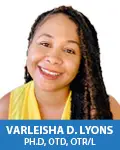
Varleisha D. Lyons, Ph.D, OTD, OTR/L
Varleisha D. Lyons Ph.D, OTD, OTR/L is a renowned occupational therapist, author, and speaker who is deeply passionate about promoting culturally intelligent and spiritually centered mental health care. As a woman of African American and Native American heritage, with ancestral ties to the Haliwa-Saponi tribe through her grandmother, Dr. Lyons is dedicated to integrating Indigenous spiritual practices into modern therapeutic frameworks.
Her work is rooted in a commitment to honoring diverse traditions and creating holistic approaches that address the mind, body, and spirit. She draws inspiration from practices such as storytelling, nature-based rituals, and ancestral healing, advocating for their inclusion in contemporary mental health systems.
Dr. Lyons is a tireless advocate for mental health parity and equity, particularly for underserved communities of Indigenous and African descent. Her mission is to bridge traditional healing practices with modern therapeutic methods, fostering understanding and respect for cultural identity and spiritual connection.
As a highly sought-after speaker and author, Dr. Lyons empowers audiences worldwide to embrace diversity, advocate for systemic change, and celebrate the intersection of heritage and healing in occupational therapy and beyond.
Registration & Fees
| Registration |
Super Early Bird Fee |
Early Bird Fee |
Regular Fee |
| Individual Enrollment |
--
|
$349.00 |
$579.00 |
| Group 3-7 |
--
|
$329.00 |
$529.00 |
| Group 8-14 |
--
|
$309.00 |
$504.00 |
| Group 15+ |
--
|
$279.00 |
$479.00 |
| Full-Time Students |
--
|
$279.00 |
$479.00 |
All fees are per person and in Canadian Dollars ($CAD)
Fees do not include applicable taxes (5% GST).
Super early bird cutoff date: February 14, 2025
The super early bird date has passed. Early bird or regular rates apply.
Early bird cutoff date: April 8, 2025
The early bird date has passed. Regular rates apply.
Register for In-Person Attendance Register your Group
Downloads
All brochures and forms are provided in .PDF format.
If you are unable to open our files, we recommend downloading Adobe Reader for free.
Brochure (.PDF)
Recommended Accommodation
Best Western Plus Winnipeg Airport Hotel
1715 Wellington Avenue, R3H 0G1
Winnipeg, MB
phone: 204.775.9889
fax: 204.775.4576
website: http://www.bestwestern.com/
 Full map & directions
Our rates:
Please contact the hotel directly for the best available rates.
Continuing Education Credits
This workshop has been formally approved by the following associations:
† The Alberta College of Social Workers (ACSW) and the Newfoundland and Labrador Association of Social Workers (NLASW) accept CPA-approved CEUs.
* Participants will receive a certificate of completion after every workshop. Workshops are pre-approved for 5.5 or 6 credits per day unless otherwise specified.
Please check back closer to the event date for more information.
Related Events
There are no related events at this time.