 Important Notice:
*Please note: The Early Bird deadline has been extended to November 13, 2015.*



Presented by Robert Brooks, Ph.D. and Ronald Siegel, Psy.D. and Lynn Lyons, MSW, RSW and Judy Willis, MD, M.Ed. and George McCloskey, Ph.D. and Jacque Gamino, Ph.D.
Monday, November 16, 2015 – Wednesday, November 18, 2015 | Saskatoon, sk
You are on the in-person registration page for this event. If you would like to attend online (live webinar or on-demand), please register through our Online Learning website.
Important Notice:*Please note: The Early Bird deadline has been extended to November 13, 2015.*
Monday, November 16, 2015 – Wednesday, November 18, 2015
8:30am – 4:00pm
TCU Place, Saskatoon’s Arts and Convention Centre
Gallery D
35 – 22nd Street East
Saskatoon, SK
Dear Colleague,
This spring we hosted our first series of Conferences on Children and Adolescents: Overcoming Behavioural, Emotional and Learning Challenges in Vancouver, BC, Toronto, ON, and Winnipeg, MB. The feedback was truly exceptional! The multi-day format with six world-class speakers truly allows professionals to tailor the training to their unique needs of their students/clients. Our conferences will consist of a wide range of topics including: the changing adolescent brain, executive skills, anxious kids, managing challenging behaviours, childhood depression, nurturing resilience, increasing student motivation, bullying, coping with trauma and many other topics. I am proud to announce that we will be hosting this conference in Saskatoon, SK, and London, ON this fall, 2015.
I am confident our training will exceed your expectations and look forward to the prospect of working with you this fall.
Warm Regards,
Jack Hirose, M.A., CCC
Jack Hirose and Associates Inc.
Clinical Professionals: All mental health professionals including, but not limited to Clinical Counsellors, Psychologists, Psychotherapists, Social Workers, Nurses, Occupational Therapists, Hospice and Palliative Care Workers, School Counsellors, Youth Workers, Mental Health Workers, Addiction Specialists, Marital & Family Therapists, Speech Language Pathologists, Vocational Rehabilitation Consultants and all professionals looking to enhance their therapeutic skills.
Education and Clinical Professionals: All education and mental health or healthcare professionals who work with children or youth including, but not limited to K–12 Classroom Teachers, School Counsellors, Learning Assistance/Resource Teachers, School Administrators, School Paraprofessionals including Special Education Assistants, Classroom Assistants and Childcare Workers • All other professionals who support behavioural challenges and complex learning needs including but not limited to: Nurses, Social Workers, Psychologists, Clinical Counsellors, Family Therapists, Occupational Therapists, Speech Language Pathologists, Addiction Counsellors, Youth Workers, Mental Health Workers, Probation Officers and Community Police Officers.
Day 1 – Monday, November 16, 2015:
1st Keynote – 8:30 am – 10:15 am
Stressed Out to Stress Hardy: Can We Take Care of Our Students if We Don’t Take Care of Ourselves?
Presented by Robert Brooks, Ph.D.
Stress, disillusionment, and burnout among educators and clinicians who work in schools are major problems, impacting on effective teaching and classroom management, and retention of staff. In his keynote Dr. Brooks will describe a framework with specific techniques for developing “stress hardiness” and lessening burnout in school professionals. A basic premise of Dr. Brooks’ keynote is that the more we can take care of ourselves, the more we can meet the educational needs of students and create a positive school climate in which learning, motivation, and purpose are nurtured.
2nd Keynote – 10:30 am – 12:00 pm
Mindfulness Inside & Outside the Classroom
Presented by Ron Siegel, Psy.D.
Educators and clinicians are enthusiastically discovering that mindfulness practices can enlighten and enliven their lives, both inside and outside the classroom or therapy hour. These techniques hold great promise for personal development and as a powerful method when working with children, adolescents and parents. To incorporate mindfulness into our work and personal lives, we need an intellectual as well as an intuitive, visceral understanding of the practice. Participants will develop a theoretical understanding of mindfulness from both the Buddhist and western scientific perspectives.
Concurrent Afternoon Workshops – 1:00 pm – 4:00 pm
The Power of Mindsets: Strategies for the Educator & Clinician to Nurture Motivation & Resilience in Children & Teens
Presented by Robert Brooks, Ph.D.
In this workshop Dr. Brooks will highlight the concept of “mindsets,” including the assumptions and expectations that guide the practices of educators and clinicians. He will describe the mindset and accompanying practices of professionals who are effective in reaching youth at all ages. He will cover such topics as: (a) the importance of applying a strength-based approach in which each child or adolescent’s “islands of competence” are identified and reinforced, (b) a framework for understanding the key components of intrinsic motivation, and (c) specific strategies for reinforcing motivation, responsibility, hope, and resilience in youth. Many case examples will
be provided.
Mindfulness Inside & Outside the Classroom – Continued
Presented by Ron Siegel, Psy.D.
Through lecture, demonstration, experiential exercise, and small group discussion, we will examine how mindfulness practice can enhance educational and therapeutic presence and transform our understanding of the causes of psychological suffering and behavioural disorders across the diagnostic spectrum. Participants will learn when and how to introduce various mindfulness techniques to their students or clients; how to tailor mindfulness practice to the needs of particular parents and children; and how to creatively work with obstacles to mindfulness practice.
Day 2 – Tuesday, November 17, 2015:
1st Keynote – 8:30 am – 10:15 am
Advancing Reasoning Skills in Adolescents: New Ideas to Engage Developing Brains
Presented by Jacque Gamino, Ph.D.
Giving students the cognitive tools to thrive in the world should be the primary thrust of education. Most educators aspire for students to learn information at a meaningful level, yet many are stymied by an emphasis on imparting a plethora of facts related to their content area. Dr. Gamino has explored the concept of teaching students how to learn instead of what to learn in classrooms across the U.S. She will be sharing the evidence from her work and provide ways to apply this information to any classroom.
2nd Keynote – 10:30 am – 12:00 pm
Anxious Kids, Anxious Families
Presented by Lynn Lyons, MSW
Anxiety disorders are the most common mental disorder found in Canadian children, with an estimated prevalence rate of 6.4 percent (Statistics Canada 2009). Anxiety impairs daily functioning and hinders the overall development of children and youth. From excessive shyness and reassurance seeking, to panic attacks, school phobia, test anxiety, obsessive or compulsive behaviour, anxiety can manifest itself in a myriad of ways. These symptoms impact children and adolescents at home and school, while putting palpable strain on the adults trying to help. The research is clear: much of what parents and other adults do to decrease the anxiety actually strengthens it by unintentionally reinforcing avoidance and rigidity.
Concurrent Afternoon Workshops – 1:00 pm – 4:00 pm
Inspiring Creative Students in the 21st Century: How the Brain Creates the Extraordinary from the Ordinary
Presented by Jacque Gamino, Ph.D.
Although the brain is wired to make connections and associations from information, information overload often thwarts these processes. Although student engagement is a key to meaningful learning, engaging techno-savvy students sometimes seems impossible. Dr. Gamino will discuss and demonstrate the importance of creativity and innovation, and the link to higher order thinking skills and student engagement.
Anxious Kids, Anxious Families – Continued
Presented by Lynn Lyons, MSW
This workshop will help participants to:
Day 3 – Wednesday, November 18, 2015:
1st Keynote – 8:30 am – 10:15 am
Neurological Strategies for Building Students’ Emotional Self-Management, Motivation, Perseverance, and their Construction of Neural Networks of Long-term Concept Memory
Presented by Judy Willis, MD.
Stressors in the classroom, including boredom and frustration, can block input from reaching the prefrontal cortex to become memory. The brain’s stress-activated blockade also prevents the reflective executive function control system from communicating with the lower brain response centers. You’ll leave with new strategies ready to use to promote the enduring understanding necessary for students to construct neural networks of long-term, transferrable concept memory.
2nd Keynote – 10:30 am – 12:00 pm
Executive Functions in the Classroom: How They Affect Learning and Behaviour
Presented by George McCloskey, Ph.D.
This keynote will discuss a multidimensional model of executive functions and the role that executive functions play in classroom learning and behaviour with special attention to the development of executive functions, the relationship between executive functions and intelligence, and the distinction between internally commanded executive control and externally demanded executive control.
Concurrent Afternoon Workshops – 1:00 pm – 4:00 pm
Using Brain Research to Help Students Develop Their Executive Functions
Presented by Judy Willis, MD.
The information age in which today’s students live is one where information content and validity needs to be critically analyzed. The demands of the accelerated quantity of information incorporated into each grade level and the increasing temptations of immediate gratification from more and more compelling and available video games and social media, mean today’s students need their executive functions to be at top efficiency. The problem is, if left alone, these neural networks will not reach that efficiency until years after graduation. You will learn new strategies and recognize the ones you are already using that are most effective for activating the neuroplastic growth of the executive function networks during their peak of responsiveness. You’ll come away with plans ready to put into action to activate these critical skillsets for all learners in all grade levels and subject areas.
Intervention for Executive Functions Difficulties
Presented by George McCloskey, Ph.D.
This workshop will describe a multidimensional model of executive functions that can be used
to guide case conceptualization and intervention selection. Descriptions of executive functions difficulties and intervention strategies for children ages 4-18 will be discussed. Information from case studies demonstrating executive functions difficulties will be discussed with emphasis on intervention recommendations, implementation, and progress monitoring.
This workshop will help participants to:

Robert Brooks, Ph.D. has lectured nationally and internationally and written extensively about working with or raising angry, at-risk youth from a strength-based approach that focuses on the development of self dignity motivation, hope, and resilience. Among his books, he is the author of The Self-Esteem Teacher, and co-author of Raising Resilient Children; Nurturing Resilience in Our Children: Answers to the Most Important Parenting Questions; The Power of Resilience: Achieving Balance, Confidence, and Personal Strength in Your Life; and Angry Children, Worried Parents: Seven Steps to Help Families
Manage Anger. Dr. Brooks is on the faculty of Harvard Medical School and is the former Director of the Department of Psychology at McLean Hospital.
“Very interesting to listen to. Made us laugh and cry. Inspiring, motivating, validating and encouraging. So glad I could be here to listen to what Dr. Brooks had to stay.”
– Dorothy B. | Edmonton, AB | October 2012
“Fabulous concepts and speaker!”
– Saskatoon, SK | October 2012
“I retire in 8 months. I came with very low expectations. It was the exact opposite. I felt I connected with Dr. Brooks on so many levels.”
– Dough (School Principal) | October 2012
“Fabulous, pertinent workshop. Engaging, informative. Really excited to put ideas into practice.”
– Edmonton, AB | October 2012
“An excellent speaker. Good information with doses of humour to keep the audience engaged. Real life examples were perfect.”
– Saskatoon, SK | October 2012
“This course should be given to all teachers and EA’s.”
“This was a great workshop. Dr. Brooks shares so much wisdom with challenging kids but also life in general.”
“Wonderful, love how personalized he is! Fabulous humour. We need to laugh in his profession.”
“Absolutely wonderful presentation, loved the format. Truly valuable information for me personally (angry child at home) and with my students in school.”
“I found Dr. Brooks to be energizing and motivational – I felt inspired for the first time in years.”
– Danielle L., Teacher | Winnipeg, MB | June 4 – 5, 2015
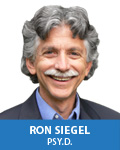
Ronald D. Siegel, Psy.D. is an Assistant Professor of Psychology, part-time, at Harvard Medical School, where he has taught for over 35 years. He is a long-time student of mindfulness meditation and serves on the Board of Directors and faculty of the Institute for Meditation and Psychotherapy. He teaches internationally about mindfulness and psychotherapy and mind–body treatment, has worked for many years in community mental health with inner-city children and families, and maintains a private clinical practice in Lincoln, Massachusetts. Dr. Siegel lives in Lincoln with his wife and daughters.
Dr. Siegel is author of The Mindfulness Solution, coauthor of the self-treatment guide Back Sense, which integrates Western and Eastern approaches for treating chronic back pain, and coeditor of an acclaimed book for professionals, Mindfulness and Psychotherapy. He regularly uses the practices in this book to work with his own busy, unruly mind.
“Dr. Siegel’s presentation is one of the best workshops I have attended. He was very informative and entertaining. I would recommend it to anyone wanting to learn more about mindfulness.”
– Terri D. | Vancouver, BC | December 2 & 3, 2014
“This workshop was extremely interesting and fulfilling. Although I wasn’t familiar with Ron’s work prior to the course, I instantly felt his authenticity and expertise. I have had a contemplative practice for over 20 years and I am so encouraged by the meeting of the spiritual and secular / scientific for contributing to the health and well-being of clients and professionals. With much gratitude for bringing his wisdom to Vancouver!”
– Vancouver, BC | December 2 & 3, 2014
“Excellent presentation! Enjoyed the mix of theory and practical. Appreciated the stories which brought the theoretical to life. Great overview of mindfulness and I am eager to learn more and apply personally and professionally.”
– Nadine | Vancouver, BC | December 2 & 3, 2014
“Thank you for the clear, effective teaching of mindfulness. I have learned a significant amount of DBT and Ron presented further useful information and techniques that will be very beneficial to my work as a youth and family therapist.”
– Vancouver, BC | December 2 & 3, 2014
“Excellent workshop. Good mix of theoretical and experiential. Good humour and stories to illustrate issues.”
– Pat R. | Vancouver, BC | December 2 & 3, 2014
“Ron is an engaging instructor, obviously very experienced and passionate about his subject area. His approach is very motivating.”
–Hilary C. | Vancouver, BC | December 2 & 3, 2014
“Ron – I loved your approach, humour and candidness. I first started to meditate 40 years ago, and have used it to ‘self regulate’ for these many decades. Very thankful that you and others have ‘legitimized’ mindfulness as an offering to clients.”
– Tom F. | Vancouver, BC | December 2 & 3, 2014
“Engaging, witty, self-deprecating, humble, but very wise to the pitfalls of therapeutic theory and its applications.”
– T. Robinson
“Wonderful, very engaging, knowledgeable and made the days fly by.”
“Appreciated the depth and breath of knowledge from which the speaker presented.”
“Ron was an interesting and dynamic speaker. Time flew. I will certainly use the exercises in my practice but more importantly try to implement mindfulness in my lifestyle.”
– Irene Semenuk
“Presenter is very engaging. Discussion quite varied. Very well organized.”
“Nice balance of humor, clarity and knowledge of information.”
“Loved his style – gentle, honest, knowledgeable. Great sense of humour.”
“Ron is so down to earth and adds humour to his seminar. Mixes anecdotal and life experiences with (awe-inspiring) research which compellingly aligns and demystifies the tenets and “proposed” effectiveness of mindfulness practices”.
– Alison Hoogervorst
“I found this workshop to be very inspiring on my journey to mindfulness in the education field.”
“Excellent presenter. I really enjoyed you and enjoyed a lot. Thank you for coming to Winnipeg.”
“Ron is very entertaining and makes the workshop fun and an enjoyable learning experience.”
“Exceeded my expectations. A wonderful blend of theory and application. So refreshing to see how mindfulness weaves through and with our clinical orientation and practice. Ron is a knowledgeable, entertaining speaker!”
– Cathleen Botten, Registered Psychologist | Banff, AB | July 15 – 17, 2015
“Dr. Siegel is an extremely skilled facilitator and I truly appreciated his sense of humour and his straightforward approach. Thanks!”
“I cannot express enough how invaluable this retreat was for me both personally and professionally. Dr. Siegel is a wonderful teacher and presenter. The all-day silent meditative practice was enormously helpful – peaceful and informational. Thank you for a wonderful experience.”
– Carol Metcalfe, B.A., M.S.W., R.S.W | Banff, AB | July 15 – 17, 2015
“Ron is such a skilled presenter and is constantly keeping us engaged and yearning for more! Loved the opportunity to experience being mindful!”
– Louise | Banff, AB | July 15 – 17, 2015
“I appreciated the combination of practice and education. Dr. Siegel was an engaging speaker that was very knowledgeable. I am very satisfied with what I have learned in the last 3 days. I believe that it will be an asset to my clinical practice.”
“I really appreciated Dr. Siegel’s breadth of knowledge. He helped us to more fully understand what mindfulness is – I didn’t realize how elementary my previous understanding was. I also really enjoyed Dr. Siegel’s humour and humility – he has an amazing ability to humanize our experiences inside and outside of theory. I thoroughly enjoyed this workshop.”
– Erin Fischer, B.A, M.Ed | Banff, AB | July 15 – 17, 2015
“Truly excellent and useful – it motivated me to practice mindfulness more intensely.”
– Marta Edgar, Ph. D, R. Pysch | Banff, AB | July 15 – 17, 2015
“Incredibly valuable workshop. Generous presenter – sharing educational material and knowledge/stories and personal experiences. Loved the personal meditation experiences as well. Thank you!”
– Barbara Morrison, MSW, RSW | Banff, AB | July 15 – 17, 2015
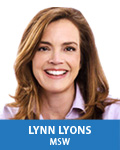
Lynn Lyons, MSW, RSW, is an internationally recognized psychotherapist, author, and speaker with a special interest in interrupting the generational patterns of anxiety in families. Her skill-based approach to anxiety focuses on the need to teach families about HOW anxiety works and what families can do to pull members out of the powerful “anxiety cult” that demands obedience to its need for certainty and comfort. Lynn’s approach uses humor, playful connection, and a constant focus on DOING, an umbrella strategy she has taught to thousands of professionals and families.
Lynn is the co-author with Reid Wilson of Anxious Kids, Anxious Parents and the companion book for kids Playing with Anxiety: Casey’s Guide for Teens and Kids. She is the author of Using Hypnosis with Children: Creating and Delivering Effective Interventions and has two DVD programs for parents and children.
She maintains a private practice in Concord, New Hampshire where she sees families whenever she’s not on the road teaching.
“As a mental health therapist and social worker, Lynn Lyons is the reason I attended. She was incredible. Beyond being a captivating presenter, I left with practical and tangible tools to integrate into my practice. More importantly, she changed my approach.”
– Lisa Greig | Saskatoon, SK | May 11, 2017
“Lynn is an excellent speaker and did a wonderful job of clarifying anxiety and worry. The way she personifies anxiety and worry makes so much sense, and I’m hopeful I can use this new lens in my classes and life.”
– Kerry Aiken | Saskatoon, SK | May 11, 2017
“Lynn Lyons is by far the best speaker I’ve ever seen/head on any topic related to mental health ever! Her info/materials are practical and useable immediately. Her research is exceptional, accurate + current. Her views + logic make complete sense for me both as an educator and a parent. She made me realized that I was doing everything wrong when dealing with students + my children with anxiety and it felt great. I feel prepared, happy + confident to help anxious students feel better about themselves, school and life.”
– Cary Gillman | Ontario, ON | May 4, 2017
“Lynn Lyons was amazing! She was very inspirational and funny! Very knowledgeable and millions of strategies/ideas to try.”
– Ontario, ON | May 4, 2017
“Lynn Lyons was an engaging and informative speaker – I loved listening to her speak! She made me really think about how I deal with my own anxiety and the anxiety in my students. She gave me new strategies to bring back to my classroom.”
– Alethea Doucet | Ontario, ON | May 4, 2017
“Very helpful insights and practical/applicable info! Thanks.”
– Saskatoon, SK | November 17, 2015
“Impressive Speaker. Informative. Real. Down to Earth. All ideas were so logical, and while probably really hard to do, doable! Thoroughly enjoyed this and learned so much both as an educator and as a parent, and as a spouse!”
– Maureen | Saskatoon, SK | November 17, 2015
“Very relevant and timely material to my practice. It is nice to have a professional/scholarly refresher on a subject that is becoming increasingly common. The co-presenters are excellent together and their deep knowledge and experience shows clearly.”
– Jarred M | Victoria, BC | April 16, 2014
“This workshop will be helpful to me both as a teacher and a parent. There are numerous strategies that I will implement in my classroom as well as my home to empower my own children. I even believe this will help me deal with anxiety issues that I have been experiencing in adult years.”
– Burnaby, BC | April 15, 2014
“What a refreshing look at dealing with anxiety. Very practical and useful steps to implement right away. Wilson and Lyons’ humour made looking at a tough topic easy to see and understand.”
– Kelowna, BC | April 14, 2014
“Awesome and hilarious. Learned so much – so applicable! Made me realize how enabling I am – but how to change that!”
– Anna | Saskatoon, SK | November 17, 2015
“Loved, loved, loved your presentation! I have really enjoyed the relevant stories and humour. I know I will be using these practical strategies tomorrow!”
– Victoria, BC | April 16, 2014
“Thank you for making a very sensitive topic one that we can use humour and laugh about. It really helped me understand anxiety with a different eye.”
– Victoria, BC | April 16, 2014
“Awesome presentation! Simple, clear and effective tools for practitioners and parents… perfect!”
– Ursula H (District Support Services) | Burnaby, BC | April 15, 2014
“The presenters were truly experts in their field. I walked away from the workshop with a whole new appreciation for the child with anxiety, and the healthcare professionals and teachers working with these children.”
– Burnaby, BC | April 15, 2014
“I liked two people with different styles, strengths and stories. The variation kept me more alert and attentive. Very good presentation.”
– Nancy Meyer, Ph.D. (Private Practice) | Burnaby, BC | April 15, 2014
“I was interested in this workshop because of the dual approach: providing strategies to work with children and parents. You delivered. Thank you.”
– Kelowna, BC | April 14, 2014
“It validated my current practices. I found this workshop informative and very useful in giving me some new tools when dealing with children with anxiety. The speakers were knowledgeable and entertaining. I feel empowered and energized. Thank you!”
– Burnaby, BC | April 15, 2014
“Great blend of expertise and humour. The timing and pace of the session maintained attention and interest. I would recommend the workshop and presenters to colleagues.”
– Gary Choo (Educator) | Victoria, BC | April 16, 2014
“This was so inspiring and made me reflect both on my practice and my personal life.”
– Victoria, BC | April 16, 2014
“This workshop will be helpful to me both as a teacher and a parent. There are numerous strategies that I will implement in my classroom as well as my home to empower my own children. I even believe this will help me deal with anxiety issues that I have been experiencing in adult years.”
– Burnaby, BC | April 15, 2014
“Refreshing, engaging and highly useful. Loved the stories, analogies and sense of humour!”
– Rhonda Laforge (Intensive Behaviour Teacher) | Victoria, BC | April 16, 2014
“This workshop was exactly what I needed to support my clients. Great examples and strategies that are ready to use.”
– Victoria, BC | April 16, 2014
“Loved it! The best workshop on anxiety I have attended (and I’ve been to A LOT!). Practical. Changed how I think about anxiety.”
– Burnaby, BC | April 15, 2014
“Very thought-provoking. Appreciated the roleplaying so that I could see/hear how I might speak with a student. Loved the humour, and recognized your real-life experience and passion.”
– Victoria, BC | April 16, 2014

Judy Willis, MD, M.Ed., a board-certified neurologist combined her 15 years as a practicing neurologist with ten subsequent years as a classroom teacher to become a leading authority in the neuroscience of learning. With her unique background as both in neuroscience and education, she has written seven books about applying neuroscience research to classroom teaching strategies.
After graduating Phi Beta Kappa as the first woman graduate from Williams College, Willis attended UCLA School of Medicine where she was awarded her medical degree. She remained at UCLA and completed a medical residency and neurology residency, including chief residency. She practiced neurology for 15 years before returning to university to obtain her teaching credential and Master’s of Education degree from the University of California, Santa Barbara. She then taught in elementary and middle school for 10 years.
Dr. Willis has served on the adjunct faculty of the University of California Santa Barbara Graduate School of Education and travels nationally and internationally giving presentations, workshops, and consulting about learning and the brain. She has been interviewed by USA Today, Euronews, The Wall Street Journal, NBC News Education Nation, ABC Australia Radio, Lateline Australia, Popular Mechanics, Neurology Today, USA Today, Education Week, Parenting Magazine among others, and writes staff expert blogs for NBC News Education Nation, Edutopia, Psychology Today, and The Guardian. In 2011 she was selected by Edutopia as a “Big Thinker on Education.”

George McCloskey, Ph.D., is a Professor and Director of School Psychology Research in the Psychology Department of the Philadelphia College of Osteopathic Medicine and holds Diplomate status with the American Academy of Pediatric Neuropsychology. He frequently presents at international and national meetings on cognitive and neuropsychological assessment and intervention topics. Dr. McCloskey is the lead author of the books Assessment and Intervention for Executive Function Difficulties and Essentials of Executive Functions Assessment and his most recent writing on interventions for executive function and executive skills difficulties appears in Chapter 10 of the book Essentials of Planning, Selecting, and Tailoring Interventions for Unique Learners. He also is the author of the McCloskey Executive Functions Scales (MEFS) that are currently in standardization
“Loved the workshop. George was very knowledgeable and inspiring. He kept my focus and attention the entire day. Packed full of hands on strategies. I would recommend to anyone working with people to find their goals”
– Toronto, ON | May 1, 2019
“Dr. McCloskey was incredibly knowledgeable and excellent instructor”
– Toronto, ON | May 1, 2019

Jacque Gamino, Ph.D., is currently the director of the BrainHealth Adolescent Reasoning Initiative. She has ten years of research experience developing, testing, and implementing brain, cognitive and behavioral assessment and training protocols for advanced reasoning in youth. Dr. Gamino, a cognitive neuroscientist, has dedicated her life to translating cutting edge research discoveries into practical applications to improve the learning capacity of students.
Fees do not include applicable taxes (5% GST).
Early bird cutoff date: November 13, 2015
The early bird date has passed. Regular rates apply.
Please review our Registration Terms and Conditions for information on our cancellation policy, payment policies, rebates, and more. You must agree to our Terms and Conditions to register for a workshop or conference.
All brochures and forms are provided in .PDF format.
If you are unable to open our files, we recommend downloading Adobe Reader for free.
Exhibitors are welcome at this event. We are pleased to offer sponsorship opportunities to businesses and organizations that provide services related to nursing, psychotherapy, addictions treatment, counselling, marriage & family therapy, psychology and other related fields.
→ More information
90-22nd Street East
Saskatoon, SK
phone: 1.306.244.2311
Please check back closer to the event date for more information.
There are no related events at this time.
