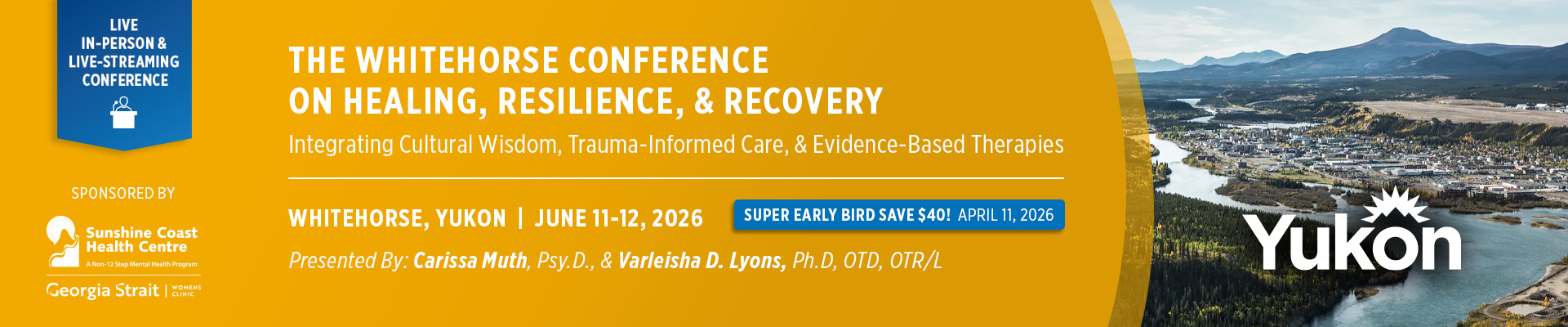
The Whitehorse Conference on Healing, Resilience, and Recovery: Integrating Cultural Wisdom, Trauma-Informed Care, and Evidence-Based Therapies
Presented by
Carissa Muth, Psy.D., CCC, R.Psych
and Varleisha D. Lyons, Ph.D, OTD, OTR/L
Thursday, June 11, 2026 – Friday, June 12, 2026
|
Whitehorse, yt
Date & Location
Thursday, June 11, 2026 – Friday, June 12, 2026
8:30am – 4:00pm
The Sternwheeler Hotel & Conference Centre
201 Wood St, Whitehorse, YT Y1A 2E4
phone: 867.393.9700


Who Should Attend
Education and Clinical Professionals: K–12 Classroom Teachers, School Counsellors/Psychologists, Learning Assistance/ Resource Teachers, School Administrators, School Paraprofessionals including Special Education Assistants, Classroom Assistants and Childcare Workers. All other professionals who support students including but not limited to: Nurses, Social Workers, Psychologists, Clinical Counsellors, Family Therapists, Occupational Therapists, Speech Language Pathologists, Addiction Counsellors, Youth Workers, Mental Health Workers, Probation Officers, and Early Childhood Educators.
Day One – June 11, 2026
1. Integrating Neuropsychology, CBT, DBT, Narrative and Meaning-Focused Therapy to Heal Traumatic Wounds, Addictions and Other Mental Health Disorders
Presented by
Carissa Muth, Psy.D., CCC, R.Psych
8:30am - 4:00pm June 11, 2026
COURSE DESCRIPTION
This workshop, led by Dr. Carissa Muth, offers an integrative roadmap for treating complex comorbidities where single-modality approaches often fail. Participants will begin by exploring the neurobiological underpinnings of trauma and addiction, learning how these conditions impact the brain’s executive functioning and reward systems. Building on this foundation, the course demonstrates how to sequence interventions, utilizing DBT skills for initial physiological stabilization and CBT for identifying and restructuring maladaptive cognitions. Dr. Muth will then guide clinicians in applying Narrative Therapy techniques to externalize the shame-based identities often found in survivors of trauma and substance use disorders. The training culminates in Meaning-Focused strategies that help clients reconstruct a sense of purpose and a coherent identity beyond their diagnosis. Through complex case studies and integrated treatment planning, attendees will learn to weave these distinct threads into a cohesive, personalized healing journey for high-acuity clients.
Show more
LEARNING OBJECTIVES
- Analyze the neurobiological mechanisms of trauma and addiction (e.g., hypofrontality and dopamine dysregulation) to explain why top-down processing often fails in early treatment.
- Sequence interventions effectively by prioritizing DBT distress tolerance skills to widen the “Window of Tolerance” before attempting trauma processing.
- Apply CBT cognitive restructuring techniques to dismantle specific trauma-based core beliefs (e.g., “I am permanently damaged”) that fuel addictive cycles.
- Utilize Narrative Therapy externalization techniques to separate the client’s identity from their symptoms, shifting the focus from “I am an addict” to “I am fighting the addiction.”
- Facilitate Meaning-Focused interventions that promote Post-Traumatic Growth, helping clients identify values and purpose that serve as anchors against relapse
AGENDA
Module 1: Neuropsychology
- The Complex Brain: Interactions between executive functioning and subcortical regions
- The Dopamine Trap: The neurochemistry of addiction and why “just saying no” is a biological impossibility for a dysregulated nervous system.
- Neuroplasticity as Hope: Teaching clients that their brain can heal and rewire through consistent therapeutic practice.
Module 2: Stabilization First – The DBT Foundation
- Regulating the Physiology: Using DBT TIP Skills (Temperature, Intense Exercise, Paced Breathing) to manage acute cravings and flashbacks.
- Distress Tolerance: Moving from “acting out” (relapse/self-harm) to “riding the wave” of emotion.
- The “Wise Mind”: Helping clients find the middle ground between the emotional chaos of trauma and the rigid logic of avoidance
Module 3: Cognitive & Narrative Integration – Changing the Story
- CBT for Trauma: Identifying the “Stuck Points” and cognitive distortions that maintain shame (e.g., Hindsight Bias: “I should have known”).
- Narrative Re-Authoring:
- Externalizing the Problem: Naming the addiction/trauma (e.g., “The Void,” “The Beast”) to reduce shame.
- Unique Outcomes: Hunting for moments where the client successfully resisted “The Beast.”
- Bridging the Gap: Using CBT to challenge the thought, and Narrative to change the relationship with the thinker
Module 4: Meaning-Focused Therapy – The Engine of Recovery
- Beyond Symptom Reduction: Why sobriety isn’t enough—the need for a life worth living.
- Logotherapy Principles: Applying Viktor Frankl’s concepts to modern trauma treatment (“He who has a why to live can bear almost any how”).
- Values Construction: Identifying “Values-Based Actions” that contradict the trauma identity
Module 5: The Integrated Case Study
- Step-by-Step Sequencing:
- Phase 1: Neuro-education and DBT safety planning.
- Phase 2: CBT for shame reduction.
- Phase 3: Narrative work for identity shift.
- Phase 4: Meaning work for long-term maintenance.
- Small Group Work: Participants practice sequencing interventions for a provided vignette.
Module 6: Closing & Synthesis
- The Therapist’s Role: Balancing being a “Coach” (CBT/DBT) with being a “Witness” (Narrative/Meaning).
- Q&A

Dr. Carissa Muth is a registered psychologist in Alberta and the Clinical Director at the Sunshine Coast Health Centre and Georgia Strait Women’s Clinic. She holds Doctorate of Psychology, Master of Arts in Counselling, and Bachelor of Social Work degrees…
→ Read more
2. Healing through Tradition: Reclaiming Culture, Identity, and Spirituality
Presented by
Varleisha D. Lyons, Ph.D, OTD, OTR/L
8:30am - 4:00pm June 11, 2026
COURSE DESCRIPTION
Join internationally respected occupational therapist and researcher Dr. Varleisha (Gibbs) Lyons for a powerful one-day clinical workshop in Whitehorse, Yukon, exploring the intersection of trauma, culture, identity, and spirituality in healing. Grounded in Indigenous perspectives and informed by neuroscience and clinical practice, this training will help professionals deepen their understanding of intergenerational trauma and the role of cultural reconnection in restoring well-being.
Participants will examine the historical and ongoing impacts of colonization, cultural disruption, and systemic inequities on identity formation, mental health, and community wellness. Dr. Lyons will guide attendees through the role of spirituality, ceremony, storytelling, and traditional knowledge as powerful pathways for resilience and recovery. Emphasis will be placed on how clinicians and helping professionals can respectfully integrate cultural awareness and Indigenous-informed practices into therapeutic and community-based work.
Held in person in Whitehorse, this workshop offers a unique opportunity to learn and reflect within the cultural and natural context of the North. Being together in the Yukon allows participants to engage in meaningful dialogue, shared reflection, and experiential learning that simply cannot be replicated online. Participants will connect with fellow professionals serving northern and rural communities while exploring how the land, culture, and community relationships support healing and resilience.
This training is designed for clinicians, educators, and community practitioners who want to strengthen culturally responsive approaches and develop deeper insight into trauma-informed and culturally grounded healing practices.
Show more
LEARNING OBJECTIVES
- Describe the historical foundations of intergenerational trauma and its impact on identity, mental health, and community well-being.
- Explain the role of spirituality, storytelling, and traditional practices in Indigenous approaches to healing and resilience.
- Recognize the importance of cultural identity and belonging in supporting emotional and psychological recovery.
- Apply culturally responsive strategies that strengthen therapeutic and helping relationships with individuals and families.
- Identify ways to integrate culturally grounded perspectives into clinical, educational, and community-based practice.
- Understand the role of youth mentorship and cultural continuity in fostering long-term resilience within communities.
AGENDA
Setting the Context: Trauma, Culture, and Healing
An introduction to the relationship between intergenerational trauma, identity, and community well-being, and why culturally informed approaches are essential in clinical and helping professions.
Understanding Intergenerational Trauma
Exploring the historical roots of trauma and how its impacts continue to affect identity, emotional health, and community resilience across generations.
Spirituality, Culture, and Healing Practices
Examining the role of spirituality, storytelling, ceremony, and traditional knowledge as pathways for resilience, connection, and recovery.
Integrating Cultural Perspectives into Practice
Practical strategies for incorporating culturally responsive approaches into clinical, educational, and community settings.
Community Resilience and Cultural Continuity
A discussion on mentorship, youth leadership, and the importance of strengthening cultural identity and connection across generations.
Closing Reflection
Key insights from the day and discussion on how participants can apply these perspectives in their professional work.

Varleisha D. Lyons Ph.D, OTD, OTR/L is a renowned occupational therapist, author, and speaker who is deeply passionate about promoting culturally intelligent and spiritually centered mental health care. As a woman of African American and Native American heritage, with ancestral ties…
→ Read more
Day Two – June 12, 2026
3. Treating Anxiety, Depression, Worry and Stress in Children and Adolescents
Presented by
Carissa Muth, Psy.D., CCC, R.Psych
8:30am - 4:00pm June 12, 2026
COURSE DESCRIPTION
In this comprehensive training, Dr. Carissa Muth addresses the escalating crisis of internalizing disorders in youth, providing clinicians with a robust framework for treating anxiety, depression, and chronic stress. Moving beyond standard “talk therapy,” the course adapts evidence-based protocols—specifically Cognitive Behavioral Therapy (CBT) and Acceptance and Commitment Therapy (ACT)—to match the developmental needs of children and teenagers. Participants will learn to distinguish between normal developmental fears and clinical diagnoses, avoiding the common trap of pathologizing growing pains while ensuring acute distress is not overlooked. Dr. Muth places special emphasis on the “family system,” teaching therapists how to coach parents out of “accommodation behaviors” that inadvertently feed a child’s anxiety. The workshop also covers practical strategies for addressing the unique presentation of childhood depression, which often masks as irritability or somatic complaints rather than sadness. Finally, attendees will leave with a toolkit of creative, play-based, and somatic interventions to engage resistant youth and build lifelong resilience.
Show more
LEARNING OBJECTIVES
- Differentiate between developmentally appropriate worry (e.g., stranger anxiety, academic stress) and clinical disorders to ensure accurate diagnosis and treatment planning.
- Apply youth-friendly CBT interventions, such as “externalizing the worry monster” and “thought detective” exercises, to help children challenge maladaptive thinking patterns.
- Identify and address “Family Accommodation Behaviors”—where parents modify routines to prevent a child’s distress—that maintain and worsen anxiety disorders.
- Utilize Behavioral Activation strategies adapted for adolescents to break the cycle of withdrawal and lethargy common in youth depression.
- Teach somatic regulation skills that help children manage physical symptoms of stress (stomach aches, headaches) when they lack the vocabulary to express emotion.
AGENDA
Module 1: The Anxious & Depressed Brain – Developmental Context
- The “Hidden” Epidemic: Understanding current trends in youth mental health (social media impact, post-pandemic stressors).
- Assessment & Diagnosis:
- Depression vs. Irritability: Why depressed kids often look angry, not sad.
- Anxiety vs. ADHD: Teasing apart restlessness from worry.
- Neurobiology for Kids: How to explain the “Amygdala Alarm” to a 7-year-old vs. a 15-year-old.
Module 2: Anxiety & Worry – The CBT & ACT Toolkit
- Externalization: Naming the Anxiety (e.g., ” The Bully,” “The Worry Bug”) to separate the child from the symptom.
- The Avoidance Trap: Teaching kids (and parents) that avoidance feeds the fear.
- Cognitive Defusion: ACT techniques for teens to “unhook” from spiraling thoughts rather than fighting them.
- Exposure “Missions”: Designing playful, gamified exposure hierarchies to face fears gradually.
Module 3: The Parent Trap – Systemic Interventions
- Understanding Accommodation: The well-intentioned things parents do that keep anxiety alive (e.g., ordering for the child, sleeping in their bed).
- The SPACE Model Concepts: Brief introduction to Supportive Parenting for Anxious Childhood Emotions.
- Co-Regulation: Teaching parents to be the “thermostat” rather than the “thermometer” of the emotional climate.
Module 4: Depression – Breaking the Inertia
- Behavioral Activation (BA):
- The Fun First Rule: Why we schedule enjoyment before mastery for depressed teens.
- Activity Monitoring: Tracking mood vs. activity to prove the link to the client.
- Suicide & Self-Harm Assessment: Specific protocols for assessing risk in minors and safety planning with parents.
- Somatic Complaints: Addressing the “stomach ache” of depression without medicalizing emotional pain
Module 5: Stress Management & Resilience
- School Refusal: A specific protocol for getting kids back into the classroom.
- Sleep Hygiene: The critical role of sleep in emotional regulation for adolescents.
- Social Media Literacy: Helping teens navigate the “comparison trap” and cyber-stress.
Module 6: Integration & Case Studies
- The Comorbid Child: Managing a case with both high anxiety and depressive shut-down.
- Engaging the Resistant Teen: Strategies for the client who “doesn’t want to be here.”
- Q&A
4. Working with Highly Dysregulated Children and Adolescents: Practical Strategies and Interventions
Presented by
Varleisha D. Lyons, Ph.D, OTD, OTR/L
8:30am - 4:00pm June 12, 2026
COURSE DESCRIPTION
Embark on an illuminating learning experience with sought-after occupational therapist Dr. Varleisha (Gibbs) Lyons, PhD, OTD, OTR/L, ASDCS, FAOTA, as she guides participants through a transformative six-hour workshop focused on understanding and supporting highly dysregulated children and adolescents. Dr. Lyons will explore how to select effective interventions for young people displaying challenging behaviours such as hyperactivity, aggression, self-stimulatory behaviours, impulsivity, emotional outbursts, and inattentiveness.
Through an engaging, evidence-based presentation, participants will develop a deeper understanding of the connection between neuroscience, sensory processing, and self-regulation. Dr. Lyons will explain how the developing brain and nervous system influence behaviour, emotional control, and daily functioning, helping professionals better interpret what children’s behaviours are communicating and how to respond effectively.
Participants will also be introduced to practical self-regulation and mindfulness-based strategies designed to support children and adolescents across a wide range of environments. These approaches are applicable for professionals working in clinical, community, educational, and family-support settings who are looking to strengthen emotional regulation and coping skills in the youth they support.
Throughout this immersive workshop, attendees will explore the neurobiology of regulation and the role of sensory-based strategies, tools, and techniques that can help children manage overwhelming emotions and behaviours. The session will address common diagnoses associated with regulation challenges—including sensory processing differences, trauma, autism spectrum disorder, and ADHD—and examine a variety of supportive approaches such as mindfulness practices, social-skill development, music and movement activities, and breathing-based regulation strategies.
This in-person workshop is hosted in Whitehorse, Yukon, providing a valuable opportunity for professionals in the North to access high-quality training without needing to travel long distances. Bringing together educators, clinicians, and community professionals from across the Yukon and Northern communities, this event will foster meaningful connection, collaboration, and discussion around supporting children and adolescents experiencing emotional and sensory regulation challenges.
Join Dr. Varleisha (Gibbs) Lyons for this engaging and practical workshop and gain valuable insights and tools to better understand dysregulation, strengthen resilience, and support healthier emotional and behavioural development in children and adolescents.
Show more
LEARNING OBJECTIVES
- Gain comprehensive knowledge of the neuroscience underpinning self-regulation and sensory processing as it relates to children and adolescents.
- Summarize the characteristics of sensory processing challenges and their related diagnoses.
- Understand the neurological components relevant to both diagnosis and treatment.
- Explore the cause-and-effect relationships between intervention techniques and their neurological impact.
- Describe the evidence supporting current intervention techniques designed to improve self-regulation and sensory functioning in children and youth.
AGENDA
Understanding Dysregulation in Children and Adolescents
- Defining self-regulation and dysregulation
- How the developing brain influences behaviour and emotional control
- Recognizing signs of sensory and emotional dysregulation
Neuroscience of Self-Regulation and Sensory Processing
- Brain systems involved in regulation and sensory processing
- The role of the nervous system in behaviour and attention
- Understanding the neurological foundations of regulation challenges
Sensory Processing Challenges and Related Diagnoses
- Identifying common sensory processing patterns
- Connections to conditions such as ADHD, autism, trauma, and sensory processing disorder
- How sensory differences impact daily functioning and behaviour
Evidence-Based Intervention Strategies
- Sensory-based strategies and tools to support regulation
- Mindfulness and body-based regulation techniques
- Movement, music, and breathing approaches for calming the nervous system
Applying Strategies in Practice
- Matching interventions to specific behavioural presentations
- Understanding the neurological impact of different interventions
- Building practical regulation supports for children and adolescents
Case Examples and Integration
- Applying neuroscience-informed strategies to real-world scenarios
- Integrating regulation strategies across home, community, and care settings
- Key takeaways and practical tools for immediate use
Registration & Fees
| Registration |
Super Early Bird Fee |
Early Bird Fee |
Regular Fee |
| Integrating Neuropsychology, CBT, DBT, Narrative and Meaning-Focused Therapy |
--
|
|
|
| Individual Enrollment |
$279.00 |
$299.00 |
$319.00 |
| Group 3-7 |
$229.00 |
$249.00 |
$269.00 |
| Group 8-14 |
$209.00 |
$229.00 |
$249.00 |
| Group 15+ |
$189.00 |
$209.00 |
$229.00 |
| Full-Time Student |
$189.00 |
$209.00 |
$229.00 |
|
--
|
|
|
| Treating Anxiety, Depression, Worry and Stress in Children and Adolescents |
--
|
|
|
| Individual Enrollment |
$279.00 |
$299.00 |
$319.00 |
| Group 3-7 |
$229.00 |
$249.00 |
$269.00 |
| Group 8-14 |
$209.00 |
$229.00 |
$249.00 |
| Group 15+ |
$189.00 |
$209.00 |
$229.00 |
| Full-Time Student |
$189.00 |
$209.00 |
$229.00 |
|
--
|
|
|
| ATTEND BOTH AND SAVE |
--
|
|
|
| Individual Enrollment |
$499.00 |
$519.00 |
$539.00 |
| Group 3-7 |
$459.00 |
$469.00 |
$489.00 |
| Group 8-14 |
$429.00 |
$449.00 |
$469.00 |
| Group 15+ |
$399.00 |
$419.00 |
$439.00 |
| Full-Time Student |
$399.00 |
$419.00 |
$439.00 |
All fees are per person and in Canadian Dollars ($CAD)
Fees do not include applicable taxes (5% GST).
Super early bird cutoff date: April 11, 2026
To receive the super early bird rate, registration and payment must be received by Saturday, April 11, 2026.
Early bird cutoff date: May 11, 2026
To receive the early bird rate, registration and payment must be received by Monday, May 11, 2026.
Register Online Register your Group
Downloads
All brochures and forms are provided in .PDF format.
If you are unable to open our files, we recommend downloading Adobe Reader for free.
Recommended Accommodation
The Sternwheeler Hotel & Conference Centre
201 Wood St, Whitehorse, YT Y1A 2E4
phone: 867.393.9700
 Full map & directions
Our rates:
The group rate is $219 per night, plus tax and fees (5% GST and a 2.5% Sustainability Levy). Double and King bed rooms available.
When making your reservation, please reference Group Confirmation I.D. 67303 and/or Jack Hirose & Associates
Continuing Education Credits
Please check back closer to the conference date for more information.
Related Events
There are no related events at this time.