
Lisa Porter, DCP, CCC, CCS, started her career as a high school teacher, working in the public education in both Alberta and BC. She later transitioned into high school counselling, where she spent ten years supporting student mental health and…



Presented by Cynthia Wesley-Esquimaux, Ph.D. and Lisa Porter, DCP, CCC, CCS and Caroline Buzanko, Ph.D., R. Psych and Varleisha D. Lyons, Ph.D, OTD, OTR/L and Samaria Nancy Cardinal, MSW, RSW
Wednesday, November 4, 2026 – Friday, November 6, 2026 | Calgary, ab
Wednesday, November 4, 2026 – Friday, November 6, 2026
8:30am – 4:00pm
Grand Hotel Calgary Airport & Convention Center
2828 23rd Street NE, Calgary, AB, T2E 8T4
phone: 888.388.3932
website: www.grandhotelcalgary.com
Education and Clinical Professionals: All education and mental health or healthcare professionals who work with children or youth including, but not limited to K–12 Classroom Teachers, School Counsellors, Learning Assistance/Resource Teachers, School Administrators, School Paraprofessionals including Special Education Assistants, Classroom Assistants and Childcare Workers • All other professionals who support behavioural challenges and complex learning needs including but not limited to: Nurses, Social Workers, Psychologists, Clinical Counsellors, Family Therapists, Occupational Therapists, Speech Language Pathologists, Addiction Counsellors, Youth Workers, Mental Health Workers, Probation Officers and Community Police Officers.
8:30am - 4:00pm November 4, 2026
WORKSHOP DESCRIPTION
Artificial intelligence is rapidly changing how educators, therapists, and mental health professionals support learning, wellbeing, communication, and intervention. This practical and thought-provoking workshop brings together professionals from education, counselling, psychology, occupational therapy, speech-language pathology, physical therapy, and related fields to explore how AI can be used responsibly, effectively, and ethically in professional practice.
Moving beyond headlines and hype, participants will examine real-world applications of AI that can be implemented immediately to enhance learning, improve accessibility, support individualized interventions, streamline administrative tasks, and foster creativity and engagement. Through demonstrations, case examples, and hands-on discussion, attendees will gain practical strategies for integrating AI into their work while maintaining professional standards and human-centred care.
The workshop will also engage participants in some of the most pressing ethical and societal debates surrounding AI. Topics may include the growing use of AI as a source of companionship for young people, the environmental implications of large-scale AI technologies, concerns about privacy and data security, and the evolving role of AI in educational settings. Rather than focusing solely on detecting AI use by students, participants will explore approaches that acknowledge AI as an emerging reality and learn strategies for incorporating it into teaching, learning, and assessment in meaningful and constructive ways.
For mental health professionals, the workshop will include demonstrations of ethical AI-assisted case conceptualization and treatment planning, highlighting both the potential benefits and the important limitations of these tools. Throughout the day, participants will critically examine how AI can support professional judgment without replacing the relational, ethical, and human dimensions that remain central to education and therapy.
Participants will leave with practical tools, concrete examples, and a balanced understanding of both the opportunities and challenges AI presents, equipping them to navigate this rapidly evolving landscape with confidence, curiosity, and professional integrity.
LEARNING OBJECTIVES
AI in Action: Transforming Education and Therapy for Every Learner
By the end of this workshop, participants will be able to:
Workshop Outline:
AI in Action: Transforming Education and Therapy for Every Learner
What is AI? What can it do for me? What could go wrong? How can it be used ethically and responsibly?
| Time | Topic | Focus | Teaching methods |
| 8:30–10:15
|
The AI Revolution: Understanding the Landscape | Explore what artificial intelligence is, how it has evolved, and why it is becoming such a significant force in education and healthcare. Dispel common myths while helping participants understand both the opportunities and limitations of current AI technologies.
· What is AI? A practical overview · Generative AI versus traditional AI · Common misconceptions and media narratives · Current AI capabilities and limitations · Why AI matters for educators and clinicians · Demonstration of several AI tools
|
|
| 10:15-10:30 | Morning Break | ||
| 10:30-11:45 | Practical AI Applications Across Professional Practice | Participants explore practical ways AI can support daily professional work while enhancing and not replacing professional expertise.
§ Lesson and resource development § Accessibility and differentiated learning § Administrative efficiency § Brainstorming and creative planning § Clinical documentation § Ethical AI-assisted case conceptualization § Treatment planning demonstrations
|
|
| 11:45- 12:45 | Lunch Break | ||
| 12:45-2:15 | Ethics, Professional Judgment, and the Future of Practice | A critical examination of the ethical, legal, and professional questions emerging alongside AI adoption.
· Privacy and confidentiality · Data security · Bias and fairness · Hallucinations and misinformation · AI companionship · Environmental considerations · Academic integrity · Maintaining human-centred care
|
|
| 2:15–2:30 | Afternoon Break | ||
| 2:30-4:00 | From Curiosity to Competence: Integrating AI into Everyday Practice | Participants consolidate the day’s learning by developing practical strategies for responsible AI integration within their own professional contexts.
· Selecting appropriate AI tools · Developing organizational guidelines · Responsible prompting strategies · Evaluating AI outputs critically · Building AI literacy · Future trends and emerging developments
|
|
Lisa Porter, DCP, CCC, CCS, started her career as a high school teacher, working in the public education in both Alberta and BC. She later transitioned into high school counselling, where she spent ten years supporting student mental health and…
8:30am - 4:00pm November 4, 2026
WORKSHOP DESCRIPTION
The Medicine Wheel offers a holistic framework for understanding wellness, healing, and our connection to ourselves, our communities, and the world around us. Rooted in Indigenous teachings, the Medicine Wheel reminds us that healing is not simply the absence of illness but the ongoing process of nurturing balance among the physical, emotional, mental, and spiritual aspects of our lives.
This interactive six-hour workshop invites participants to explore the Medicine Wheel as a guide for personal reflection, healing, and growth. Through discussion, storytelling, experiential activities, and self-reflection, participants will examine the impact of life experiences, relationships, and intergenerational influences on well-being. The workshop emphasizes practical ways to reconnect with traditional teachings, strengthen resilience, and cultivate a deeper understanding of holistic wellness.
Participants will leave with a renewed appreciation for Indigenous perspectives on healing and practical strategies for fostering balance, connection, and personal growth.
LEARNING OBJECTIVE

Cynthia Wesley-Esquimaux, Ph.D. served as Vice Provost for Indigenous Initiatives at Lakehead University for three years. Effective September 2016 she was appointed as the 1st Indigenous Chair for Truth and Reconciliation in Canada for Lakehead University and continues to develop…
8:30am - 4:00pm November 5, 2026
WORKSHOP DESCRIPTION
Children today are growing up in a rapidly changing world where technology, artificial intelligence, social media, and digital entertainment have become central parts of daily life. While these advancements offer many opportunities, they have also raised important questions about their impact on child development, social connection, emotional well-being, and overall health.
Many children now spend significantly less time outdoors, have fewer opportunities for face-to-face social interaction, and are increasingly exposed to online influences, violence, and digital content that may shape their perceptions of themselves and the world around them. Families, educators, and communities are witnessing growing concerns related to social isolation, emotional dysregulation, attention difficulties, anxiety, and challenges in developing empathy, compassion, and meaningful relationships.
This workshop will explore the influence of technology, artificial intelligence, social media, and violence on the healthy development of children and youth. Participants will examine whether modern technology contributes to impaired neurodevelopment and how increasing screen use may affect emotional, cognitive, social, and relational development.
Drawing upon Indigenous perspectives, participants will explore the importance of connection, compassion, empathy, community, culture, and relationships in supporting healthy development. The workshop will highlight the value of land-based learning and experiences in nature as important protective factors that promote resilience, belonging, identity, emotional well-being, and healthy growth.
Participants will be encouraged to critically examine the role technology plays in children’s lives while exploring practical ways to restore balance through relationships, community engagement, cultural connection, outdoor experiences, and opportunities for meaningful human interaction.
Through discussion, reflection, storytelling, and shared learning, participants will gain a deeper understanding of how Indigenous teachings and community-centered approaches can help support children and youth in an increasingly digital world.
LEARNING OBJECTIVES
8:30am - 4:00pm November 5, 2026
WORKSHOP DESCRIPTION
This one-day, in-person workshop supports helpers and clinicians to integrate Indigenous-informed healing perspectives with selected Western approaches through a respectful, non-appropriative “both/and” lens. Participants will explore how Indigenous wellness is often heart-centred, relational, and grounded in story, land, and community, rather than primarily head-based or individually focused. We will introduce the Medicine Wheel as a non-diagnostic balance check-in (Physical, Emotional, Mental, Spiritual) to help participants notice “signals” instead of pathologizing “symptoms, and to guide collaborative, consent-based goal setting.
A core emphasis is relational accountability (“All My Relations”): understanding the person within a web of relationships: family, chosen kin, community, ancestors, and land. Participants will practise language and consent scripts that increase cultural safety, and learn how to hold a witnessing stance rather than an expert-fixer role. We will also build a practical stabilization toolkit that includes non-ceremonial land-informed grounding (natural elements as co-regulators) and seasonal awareness to normalize shifts in energy and capacity.
Important boundary: this workshop does not teach or replicate a ceremony. Instead, it supports ethical practice, clear scope, and relational referral pathways (e.g., Indigenous friendship centres, community programs, land-based walking groups, and appropriate cultural supports). Participants will leave with practical tools, worksheets, and an integration plan they can apply immediately, while staying accountable to humility, consent, and community connection.
LEARNING OBJECTIVES
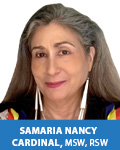
Samaria Nancy Cardinal, MSW (Clinical Practice), RSW, Candidate for RCSW, is a Blackfoot–Métis Mental Wellness therapist, educator, and the Owner/Lead Indigenous Therapy Specialist at Flower In The Wind Therapy in Calgary, Alberta. With over 20 years of experience across disability,…
8:30am - 4:00pm November 6, 2026
WORKSHOP DESCRIPTION
The digital landscape has fundamentally changed child and adolescent development, shifting the clinical and educational focus from merely tracking screen time to understanding complex, immersive digital ecosystems. Engagement-based designs, such as infinite scroll, autoplay, and algorithms, compete for youth attention, often crowding out essential developmental activities like sleep, physical play, and face-to-face connection. Furthermore, the rapid integration of conversational AI chatbots as social companions introduces unique vulnerabilities, including emotional dependency, exposure to misinformation, and the displacement of real-world critical thinking.
This advanced workshop provides a deep dive into the neurobiological, psychological, and systemic mechanisms driving digital harms. Participants will move beyond simple fear-based restriction to embrace Digital Well-Being Literacy, equipping youth to engage with technology in thoughtful, self-regulated ways. Attendees will learn evidence-based clinical frameworks for screen dependency, how to set fair phone rules, and guide youth through healthy screen habits.

Caroline Buzanko, Ph.D., R. Psych, is a psychologist. Mother. Professor. International Speaker. Yoda of Anxiety. ADHD Superhero. And Changer of Lives. With nearly three decades of experience, she is a recognized expert in resilience and the social, emotional, and behavioural well-being…
8:30am - 4:00pm November 6, 2026
WORKSHOP DESCRIPTION
Join internationally respected occupational therapist and researcher Dr. Varleisha (Gibbs) Lyons for a transformative one-day workshop exploring how trauma-informed, culturally responsive, spiritually grounded, and strengths-based approaches can better support children, youth, families, and communities.
Drawing upon Indigenous knowledge, contemporary trauma research, neuroscience, and occupational therapy practice, Dr. Lyons will help participants move beyond deficit-based and pathologizing approaches toward a deeper understanding of how trauma influences behaviour, emotional regulation, relationships, learning, and well-being. Participants will examine the impact of experiences such as racism, poverty, sexism, discrimination, violence, and colonialism while recognizing the resilience and strengths children and youth bring to their healing journeys.
Participants will explore practical approaches that help children, youth, families, and communities better understand and respond to daily stressors and triggers while strengthening coping skills, emotional regulation, connection, healing, and resilience. Attendees will also learn how Indigenous perspectives on wellness, spirituality, relationships, and community can enhance trauma-informed practice across educational, clinical, and community settings.
Designed for educators, counsellors, social workers, psychologists, occupational therapists, youth workers, healthcare professionals, and community practitioners, this workshop offers practical tools for creating supportive environments that foster belonging, well-being, and positive outcomes for all children and youth.
LEARNING OBJECTIVES
By the end of this workshop, participants will be able to:

Varleisha D. Lyons Ph.D, OTD, OTR/L is a renowned occupational therapist, author, and speaker who is deeply passionate about promoting culturally intelligent and spiritually centered mental health care. As a woman of African American and Native American heritage, with ancestral ties…
| Registration | Super Early Bird Fee | Early Bird Fee | Regular Fee |
|---|---|---|---|
| ONE DAY ENROLLMENT | -- | ||
| Individual 1 Day Enrollment | $279.00 | $299.00 | $319.00 |
| 1 Day Group 3-7 | $229.00 | $249.00 | $269.00 |
| 1 Day Group 8-14 | $209.00 | $229.00 | $249.00 |
| 1 Day Group 15+ | $189.00 | $209.00 | $229.00 |
| 1 Day Full-Time Student | $189.00 | $209.00 | $229.00 |
| -- | |||
| TWO DAY ENROLLMENT | -- | ||
| Individual 2 Day Enrollment | $499.00 | $519.00 | $539.00 |
| 2 Day Group 3-7 | $459.00 | $469.00 | $489.00 |
| 2 Day Group 8-14 | $429.00 | $449.00 | $469.00 |
| 2 Day Group 15+ | $399.00 | $419.00 | $439.00 |
| 2 Day Full-Time Student | $399.00 | $419.00 | $439.00 |
| -- | |||
| THREE DAY ENROLLMENT | -- | ||
| Individual 3 Day Enrollment | $669.00 | $689.00 | $699.00 |
| 3 Day Group 3-7 | $619.00 | $639.00 | $659.00 |
| 3 Day Group 8-14 | $599.00 | $619.00 | $629.00 |
| 3 Day Group 15+ | $469.00 | $489.00 | $509.00 |
| 3 Day Full-Time Student | $469.00 | $489.00 | $509.00 |
All fees are per person and in Canadian Dollars ($CAD)
Fees do not include applicable taxes (5% GST).
Super early bird cutoff date: September 4, 2026
To receive the super early bird rate, registration and payment must be received by Friday, September 4, 2026.
Early bird cutoff date: November 4, 2026
To receive the early bird rate, registration and payment must be received by Wednesday, November 4, 2026.
Please review our Registration Terms and Conditions for information on our cancellation policy, payment policies, rebates, and more. You must agree to our Terms and Conditions to register for a workshop or conference.
All brochures and forms are provided in .PDF format.
If you are unable to open our files, we recommend downloading Adobe Reader for free.
2828 23rd Street NE, Calgary, AB, T2E 8T4
phone: 888.388.3932
website: www.grandhotelcalgary.com
Our rates:
Please contact the hotel directly for the best available rates.
Jack Hirose & Associates is approved by the Canadian Psychological Association to offer continuing education for psychologists. Jack Hirose & Associates maintains responsibility for the program.
† The Alberta College of Social Workers (ACSW) and the Newfoundland and Labrador Association of Social Workers (NLASW) accept CPA-approved CEUs.
* Participants will receive a certificate of completion after every workshop. Workshops are pre-approved for 5.5 or 6 credits per day unless otherwise specified.
Please check back closer to the conference date for more information.
There are no related events at this time.
